Yes, piano can be self-taught, especially if your goal is to play songs you enjoy. With a keyboard, a plan and 20 to 30 minutes most days, you can get a long way on your own. Here is how to do it well, and where self-teaching tends to break down.
What you need
- A keyboard with at least 61 full-size, touch-sensitive keys, or a digital piano with 88 weighted keys if you are aiming at classical music.
- A stand and a bench or chair at a height where your forearms are level with the keys.
- Headphones, so you can practise any time.
- A metronome (a free app is fine).
More on choosing one in keyboard or piano: which to learn.
A step-by-step plan
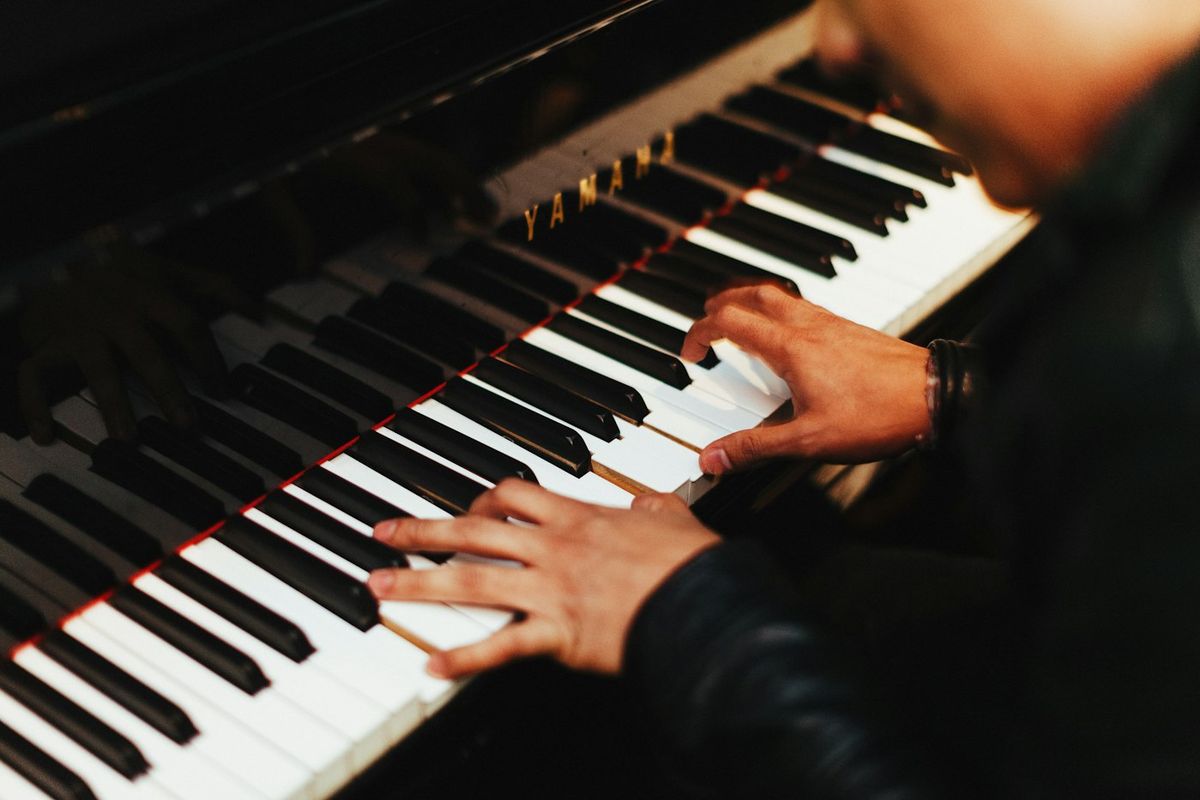
- Posture and hand shape. Sit tall, fingers gently curved, wrists level and relaxed.
- Find your way around the keys. Black keys come in groups of two and three; C is the white key just left of each group of two. Name every white key.
- Five-finger position. Thumb on C, one finger per key, and play simple melodies with each hand.
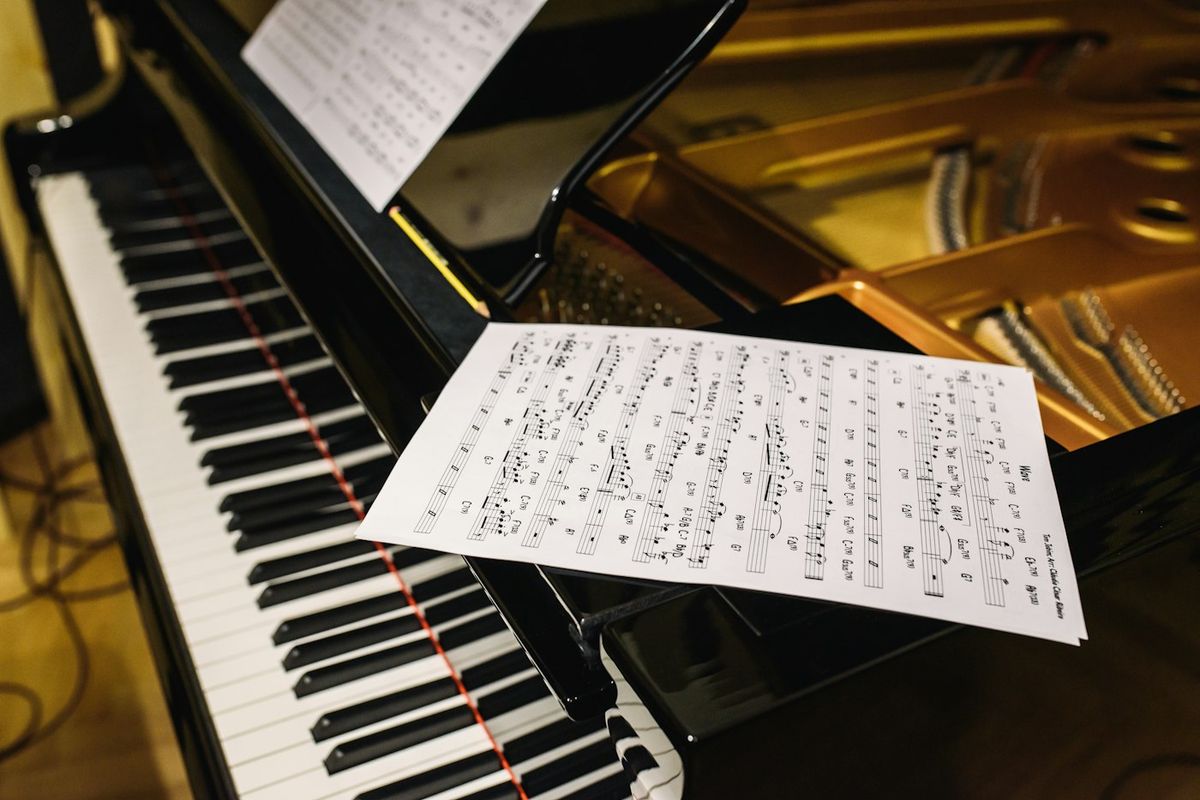
- Start reading early. Treble clef for the right hand, bass clef for the left. A few minutes every day is enough.
- Count out loud. Rhythm is what makes notes into music. Use the metronome.
- Hands together, slowly. Simple left-hand notes under a right-hand melody.
- Learn chords. C, F, G and A minor triads let you play the melody in the right hand and chords in the left: the basis of most pop songs.
- Add scales. C, G and F major, one octave, hands separately, then together.
- Choose pieces a little above your level and learn them in small sections.
Apps, online courses and YouTube
Piano apps such as Simply Piano, Flowkey and Skoove listen through your device’s microphone or a cable and tell you whether you played the right notes. They are motivating and good at note accuracy. Most work on a free trial followed by a subscription, so check the current price in your app store; few complete courses are entirely free.
Where apps fall short is everything they cannot hear or see: posture, hand tension, fingering, and playing musically. Falling-note videos on YouTube are great for learning a song quickly, but they teach you to copy rather than to read music, which slows you down later.
Is Simply Piano worth it?
For a motivated beginner who enjoys a game-like format, any of the big apps can be a good start. Use the free trial, and if after a month you can read simple music and play a few pieces with both hands, it is working. If you are mostly following coloured blocks, add a teacher or a reading-based course.
Where self-teaching breaks down
- Tension and poor fingering that become habits.
- Rhythm that drifts, because nobody is listening.
- Avoiding reading, which limits what you can learn.
- A plateau after the first songs, with no clear next step.
What to look for in an online piano course
- It teaches reading, technique and theory, not just songs.
- Lessons build in a clear order.
- There is some way to get feedback: a cable to the app, or a teacher.
- You play real pieces you like, at your level.
When lessons are worth it
Lessons pay off most in the first few months, when habits form; before graded exams; when you hit a plateau; and if anything aches when you play. Many adults combine self-study with a lesson every week or two. Gaurav teaches piano and keyboard online and in person with piano classes in Asansol.